

As If I Had Never Been
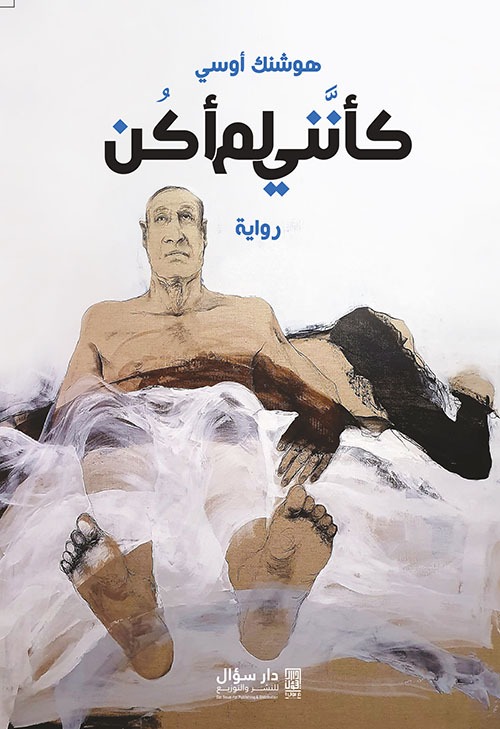
The novel revolves around the life of a visual artist living in Damascus, entirely detached from politics, the revolution, and everything that has unfolded in Syria. He devotes himself wholly to his art and is immersed in preparing an exhibition composed of twelve murals inspired by twelve short poems written by his maternal grandfather. He completes eleven paintings, but the twelfth remains unfinished after he is suddenly struck by blindness.
He consults doctors in Damascus, who assure him that there is no medical problem with his eyes or with the neurological system responsible for vision. They advise him to seek further examinations in Moscow and London for reassurance. There, he receives the same diagnosis. Doctors then suggest that he undergo psychotherapy, suspecting that the condition may be psychological rather than organic.
He holds his exhibition with eleven and a half paintings, then schedules an appointment with a psychotherapist and begins treatment in Damascus. During these sessions, memories of his rural father resurface—his father having joined the fighters of the Kurdish leader Mustafa Barzani and traveled to Iran to participate in the proclamation of the Republic of Kurdistan in Mahabad in 1946 as a peshmerga fighter. After the collapse of the Kurdish republic, the father follows his leader and comrades to Tashkent in 1947, then returns with them to Iraq in 1959 following Abdul Karim Qasim’s rise to power and the issuance of an amnesty for Barzani and his fighters.
The father witnesses the renewed conflict between the Kurds and Baghdad in 1961, followed by internal Kurdish conflicts. Disillusioned, he abandons party politics altogether and settles in Damascus in 1962, advising his son to stay away from politics, partisanship, and revolutions. In 1981, the father is killed in Damascus when he happens to be among civilians present at the site of a massive explosion, during the violent confrontation between the Muslim Brotherhood and Hafez al-Assad’s regime in the early 1980s.
Suddenly, the artist regains his sight—but loses his hearing. Once again, medical examinations reveal no organic disorder in his auditory nervous system. In 2014, he leaves Damascus for France, resumes painting, and prepares for an exhibition in Paris. However, he is killed during the terrorist attacks that struck Paris in 2015, simply because he happened to be present at the Bataclan Theatre when it was targeted.
The father lived through many wars without being killed, only to die because he happened to be at the site of an explosion in Damascus in 1981. The son, who had no involvement with politics, opposition, or the Syrian regime, is killed in exile.
As If I Had Never Been is a novel of fatal coincidences. It reflects a dimension of contemporary Kurdish fragmentation while rejecting ideological dogmatism, partisan entrenchment, and narrow affiliations. It is a novel of regret and disillusionment, and a profound denunciation of ideological wars.